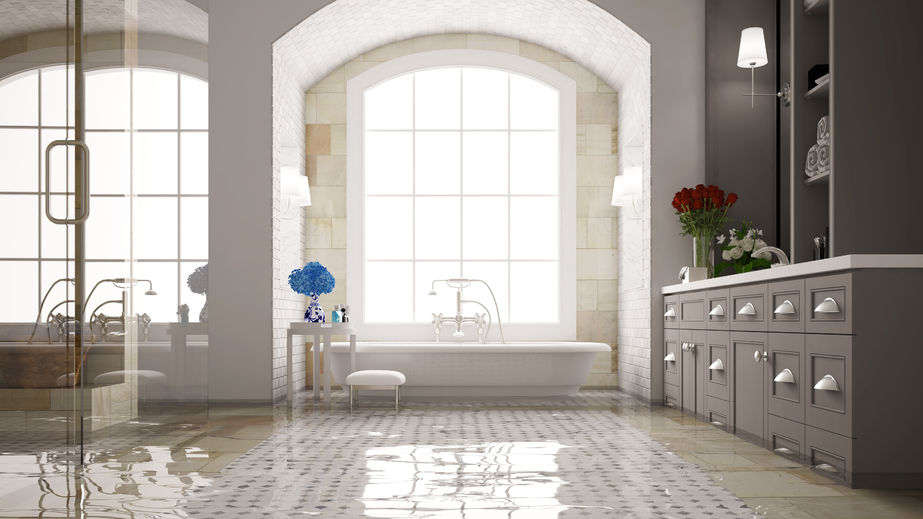
Flooding is not rare in Western New York. A single storm can overwhelm drains and low spots fast. Once water reaches your foundation, it does not need much time to cause damage.
The frustrating part is how quietly it starts. Water finds one weak point. It soaks framing and insulation. You notice it later as a musty smell, peeling paint, or a damp basement floor.
Flood prevention is not complicated, but it is specific. Keep water away from the home. If water gets close, give it a reliable path out.
Start outside, not inside
Most prevention work is drainage work. Before you buy pumps or coatings, watch where water goes during a storm.
Walk the perimeter the next time it rains. Look for pooling water near the foundation. Track where gutters and downspouts discharge. Notice where driveway runoff ends up. Those patterns tell you what to fix first.
Improve grading and drainage
Water should move away from the home. If the soil slopes toward the foundation, water will sit where you do not want it.
Focus on a few high impact changes:
- Regrade low areas so the pitch runs away from the house.
- Add downspout extensions so roof water discharges well away from the foundation.
- Add or repair drainage where water collects, such as a swale or drain line.
If you have pooling water in the corner of your home’s basement after storms, treat that as a priority. It often starts with drainage and downspout routing.
Keep gutters and discharge points clear
Gutters are simple, but they fail when they are clogged. Overflow dumps roof water right where the soil is already saturated.
Before storm season, clear gutters and downspout elbows. Check the outlets at the end of extensions. Clean window well drains. Remove yard debris that blocks surface flow. This is one of the easiest habits that prevents real damage.
Seal the common entry points
Sealing does not replace drainage. It supports it. When water pressure rises, small cracks and gaps become pathways.
Start with places that show evidence. Staining. White mineral deposits on foundation walls. Repeated dampness after heavy rain. Common entry points include foundation cracks, pipe and wire penetrations, window wells, basement window frames, and door thresholds.
If you are unsure which cracks matter, use a simple rule. Anything that changes after rain deserves attention.
Consider a sump pump and a backup pump
If water reaches the basement during heavy rain, a sump pump can be a practical safeguard. It does not solve the entire problem, but it can reduce water levels and limit damage when drainage and sealing are not enough.
Reliability comes down to details. Discharge must run away from the house. A check valve prevents backflow. A battery backup protects you during outages. If you want a simple way to confirm moisture conditions, tape plastic sheeting to basement floors and walls and check it after a rainy period.
If you already have a pump, test it before peak storm season. Replace it before it fails, not after.
Do not ignore rot risk
When water stays in contact with wood, the risk shifts from inconvenience to structural damage. Wet framing can deteriorate quietly behind finished surfaces. If you are seeing soft wood, staining, or persistent dampness, it is worth understanding the difference between wet rot vs. dry rot and addressing the source fast.
A simple storm readiness routine
Before a major storm, do a quick pass around the home. Clear gutters and confirm downspouts discharge away from the foundation. Remove yard debris that blocks drainage paths. Confirm sump pump operation and backup power. Check window wells and basement entry points for obvious gaps.
These steps reduce the odds of a surprise.
Need help protecting your home from water?
If you are seeing pooling water, damp basement areas, or recurring seepage after storms, Ivy Lea Construction can help you diagnose the cause and build the right fix. This is also the right time to evaluate basement finishing and remodeling, since moisture control should be resolved before walls and flooring go in.
Request a hassle free estimate and we will discuss next steps.