When it comes time to replace the siding on your home, most homeowners eventually land on the same two options: vinyl or James Hardie fiber cement. Both are durable, both are widely installed across Western New York, and both will serve your home well when matched to the right situation. The question is not which material is better in the abstract. It is the one that makes more sense for your home, your budget, and your priorities.
Ivy Lea Construction installs both, so this comparison has no stake in the outcome. Here is how the two materials actually differ.
What Each Material Is
Vinyl siding is made from PVC, making it lightweight, low-maintenance, and resistant to moisture by design. It has been a reliable standard for residential siding for decades, and modern options have improved significantly in thickness, color retention, and profile variety.
James Hardie siding is fiber cement, a composite of cement, sand, and cellulose fiber. It is heavier, requires more precise installation, and is engineered specifically to resist moisture absorption, impact, and extreme temperature swings. James Hardie is the dominant brand in the category and offers a full system of siding, trim, and soffit products.
Where the Two Materials Differ
Durability
Vinyl holds up well in freeze-thaw conditions and resists moisture reliably. In extreme cold or high-impact situations like hail, it can be more susceptible to cracking or denting than fiber cement. James Hardie is dimensionally stable across a wider temperature range and handles impact better under most conditions. For homes with significant wind or hail exposure, fiber cement tends to show less wear over time.
Appearance
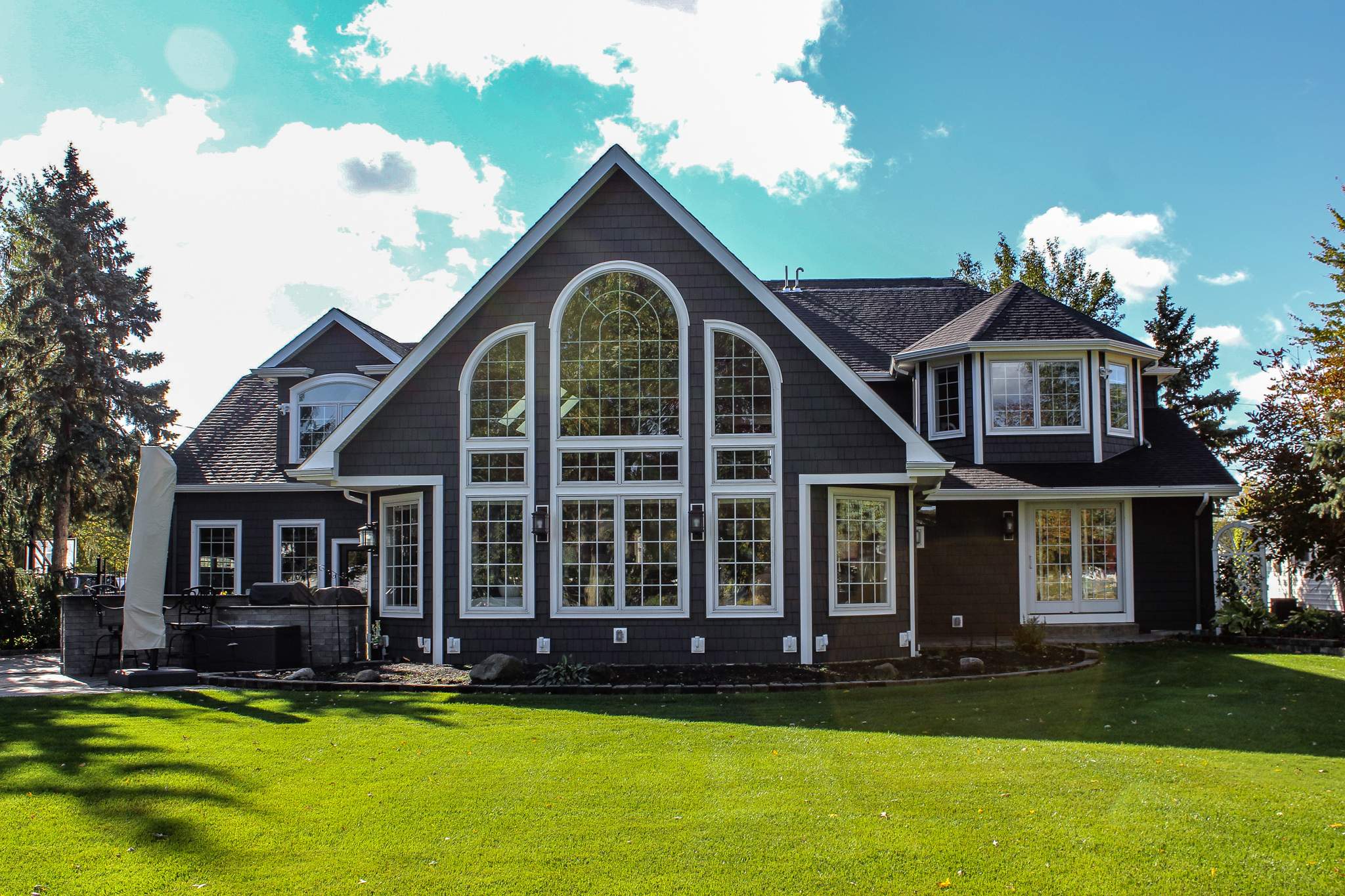
Modern vinyl profiles are varied and clean, suiting the majority of residential styles. James Hardie products more closely replicate the look of painted wood and allow for more detailed trim work at corners, windows, and rooflines. For higher-end homes or properties where resale value and curb appeal carry real weight, fiber cement tends to present with a sharper, more architectural finish. Homeowners planning a full exterior refresh often pair either material with window replacement at the same time, since updated siding and new windows finish each other visually in a way that partial updates do not.
Maintenance
Vinyl requires almost none. Color is built into the material, and cleaning it is straightforward. James Hardie will eventually need repainting, typically somewhere between 10 and 15 years depending on sun exposure, though the ColorPlus factory finish extends that cycle considerably. If a low-maintenance exterior is the priority, vinyl has the clear edge. It is also worth noting that if energy performance is part of the conversation, neither material on its own replaces the work of proper wall and attic insulation. The two systems work together, and a siding project is often a natural time to evaluate both.
Cost
Vinyl is less expensive in both material and installation labor. Fiber cement is heavier, takes more time to install correctly, and runs meaningfully higher as a result. The investment in James Hardie makes more sense as the scope, price point, and long-term value expectations of the home increase.
Which One Fits Your Situation
Rather than a single answer, consider where each material tends to be the stronger fit.
Vinyl tends to make more sense when:
- Budget is a primary factor and you want reliable coverage at a controlled cost
- Low long-term maintenance is a priority
- The home is a rental, investment property, or mid-range residential where value and durability matter most
James Hardie tends to make more sense when:
- The home is in a higher price bracket where resale value and appearance carry weight
- You want the closest visual approximation to traditional wood siding
- The home faces significant wind, hail, or impact exposure
- You are comfortable investing more upfront for a material with greater perceived and functional longevity
It is also worth knowing that some homeowners choose a combination approach, using vinyl on less visible elevations and fiber cement on the front facade where first impressions matter most. This is a practical strategy that balances cost with curb appeal and is worth raising with your contractor during the estimate conversation.
Talk It Through Before You Decide
The right material depends on details that are specific to your home. If you are still working through the decision, our siding installation team can walk you through both options in the context of your property, your goals, and your budget before you commit to anything.
Contact Ivy Lea Construction to request your free estimate.