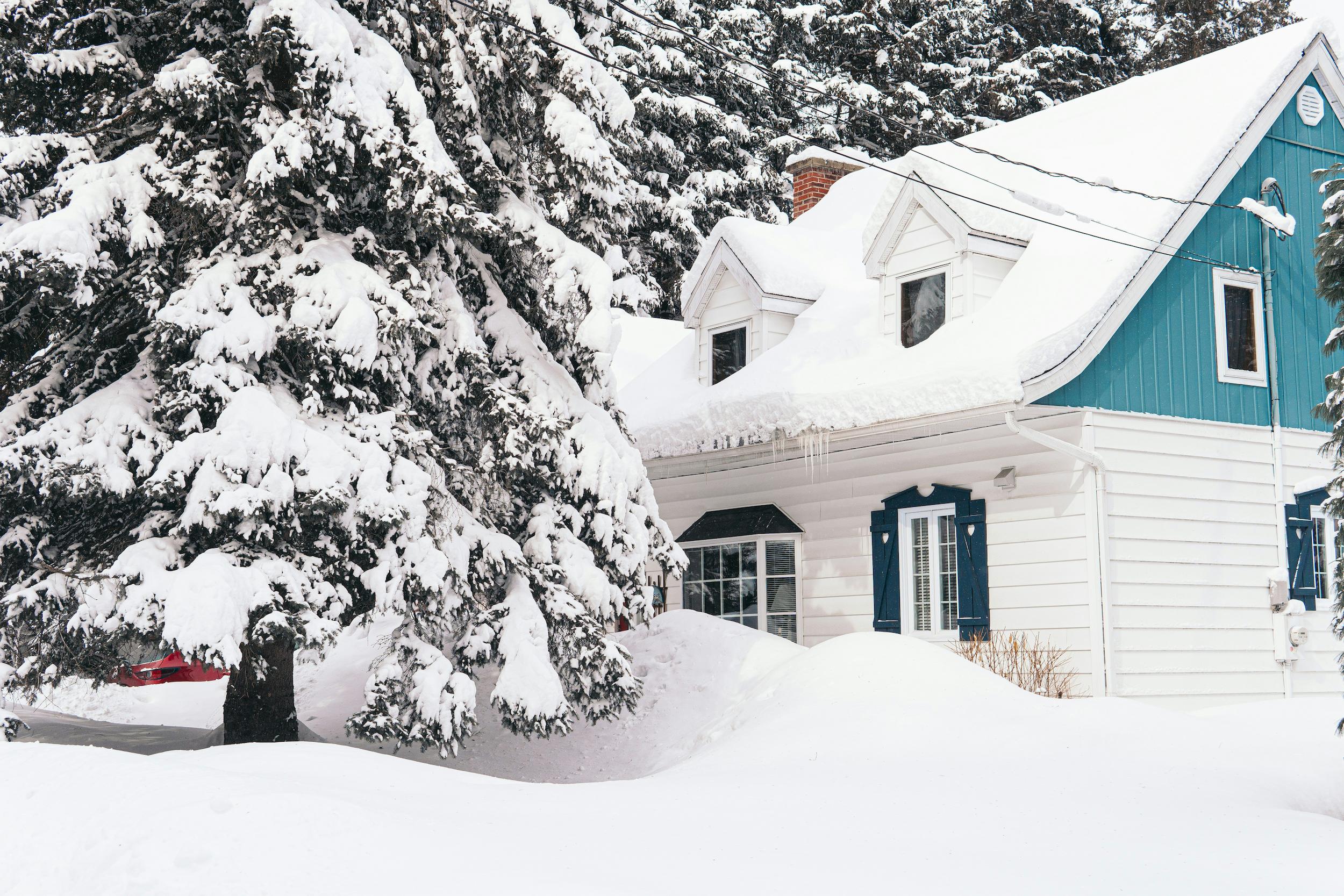
Winter in Western New York does not ease you in. It arrives hard, stays long, and leaves a trail of evidence behind. For some homeowners, that evidence is a stack of utility bills that never made sense. For others, it’s a bedroom that never aligned with what the thermostat said. For others, it’s ice forming along the roofline in patterns that felt wrong but were easy to ignore until spring arrived.
Those are not random inconveniences. They are consistent signals.
And now that the season has passed, this is the right time to look at what your home was telling you and decide whether to act before next winter starts the conversation again.
What the Symptoms Are Actually Saying
Most homeowners assume comfort problems are a furnace issue. They schedule a tune-up, replace a filter, and move on. When the same rooms stay cold the following year, the cycle repeats. What rarely gets examined is the building envelope itself, which is where the real problem usually lives.
Poor home insulation in Buffalo homes tends to show up in predictable ways. If any of the following were part of your winter this year, they are worth paying attention to now.
- Certain rooms were consistently colder than others, especially those on upper floors or above uninsulated spaces
- Your heating system ran frequently but comfort never fully followed
- You noticed drafts at baseboards, around electrical outlets, or near window frames
- Ice dams formed along the roofline or you saw frost accumulation in the attic
- Your energy bills were higher than expected given the size of your home
Each of these points to the same underlying issue. Heat was leaving your home faster than your system could replace it. Insulation slows that movement. When it is thin, uneven, or absent in key areas, there is no mechanical fix that compensates for it.
Where Heat Loss Happens Most in Buffalo Homes
Many homes in the region were built before current energy codes existed, and the insulation standards of earlier decades do not hold up against a Buffalo winter. Over time, even insulation that was adequate when installed can settle, shift, or degrade, compounding the problem.
The most common areas where heat escapes in local homes include:
- The attic, where warm air rises and escapes through gaps, thin insulation, or unprotected penetrations around wiring and plumbing
- Rim joists, which sit at the top of the foundation wall and are frequently uninsulated or unsealed in older construction
- Exterior walls with insufficient cavity insulation, particularly in homes that have never been retrofitted
- Crawl spaces and basement perimeters that allow cold air to migrate up through the floor system
The attic is typically where the biggest return on investment lives. Most homes in our climate perform best with attic insulation at R-49 to R-60. A significant number of older Buffalo homes fall well short of that range, sometimes with insulation sitting below the top of the joists and gaps that allow air to move freely regardless of what surrounds them.
Why Air Sealing Matters as Much as the Insulation Itself
This is the part of the conversation that most homeowners have not heard before. Insulation slows heat transfer through solid materials. But it does not stop air movement through gaps. And in an older home, there are more of those gaps than most people realize.
Air sealing homes alongside insulation is what produces results that actually hold. When conditioned air can leak out through penetrations around recessed lights, plumbing chases, and framing connections, even well-insulated walls and ceilings underperform. The two work together, and skipping one while focusing on the other is a common reason insulation projects disappoint.
If your home had drafts this winter that you could feel at the floor or near outlets, air sealing is likely part of the answer.
Why Spring Is the Right Time to Address It
There is a practical case for acting now rather than waiting until fall. Contractors are more available in spring than they are in September and October when demand peaks before winter. Attic work in particular is more comfortable to complete before summer heat makes the space difficult to work in.
There is also a financial case. Insulation upgrades in New York State frequently qualify for utility rebates and incentives that reduce the out-of-pocket cost of the project. Those programs have enrollment windows and funding limits that make early action worthwhile.
And there is a comfort case that is easy to overlook. Better home insulation in Buffalo does not only help in winter. A properly insulated and air-sealed home holds conditioned air in summer just as effectively as it holds heat in winter. The same upgrade that fixes your cold bedroom in January makes it easier to cool that room in July.
What to Do If This Winter Raised Questions
Start with the attic. That is the single area most likely to produce noticeable results for the cost involved. If your attic insulation is below the top of the joists, uneven, or has never been upgraded, it is worth a closer look before another heating season begins.
From there, consider where you noticed the most consistent comfort problems. Cold first-floor rooms often trace back to an uninsulated rim joist. Drafts that move along the floor or near outlets point to air sealing gaps. Ice dams indicate heat escaping through the roof deck, which connects directly to attic insulation and ventilation.
Blown-in insulation is typically what contractors recommend for attics because it fills irregular spaces thoroughly and achieves consistent coverage across the full depth required. Spray foam is better suited for rim joists, mechanical chases, and areas where air sealing and insulation need to happen together in a confined space. The right material depends on the location and what the space requires.
Ready to Find Out What Your Home Needs?
If this past winter left you with unanswered questions about your home’s performance, Ivy Lea Construction can help you find the answers. We install complete insulation systems for homes across Buffalo and Western New York, including attic insulation, blown-in cellulose, spray foam, air sealing, rim joist work, and basement insulation.
Learn more about our insulation services or contact us to schedule your hassle-free estimate. We will assess what you have, explain what would make a meaningful difference, and give you a clear path forward before next winter arrives.