What Your Furnace Cannot Fix, Better Insulation Can
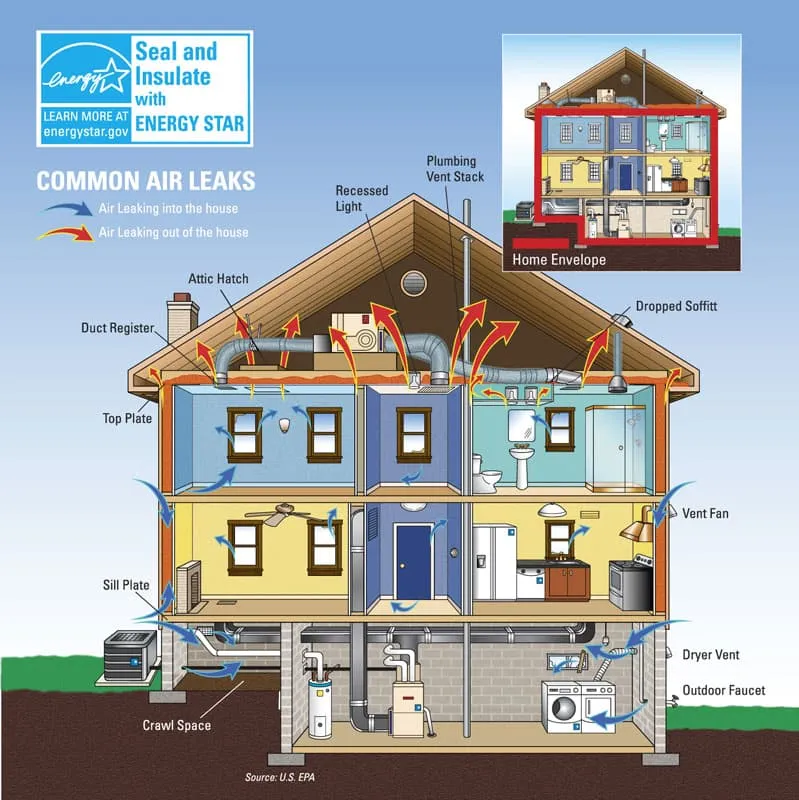
Most Buffalo homes were built when energy costs were low, and building standards were different. The result is older housing stock with attics, walls, and rim joists that allow heat to escape steadily through every season. Heating systems work harder than they should. Rooms stay cold near the floor or near exterior walls. Utility bills climb, but comfort does not follow.
The problem is rarely the furnace. It is usually the building envelope. And in Western New York’s climate, that gap between a well-insulated home and a poorly insulated one is felt every single day from November through March.
At Ivy Lea Construction, we install complete insulation systems that address heat loss where it actually occurs. Whether you are dealing with a drafty older home, an underperforming attic, or cold first-floor rooms, we can identify what is missing and install the right solution for your home and your budget.
Insulation Services for Every Part of Your Home
The right approach depends on where heat is escaping and what materials are already in place. We install insulation across the full building envelope.
Insulation Materials We Install
No single material is right for every application. We work with three primary options and select based on location, performance goals, and budget.
Spray Foam Insulation
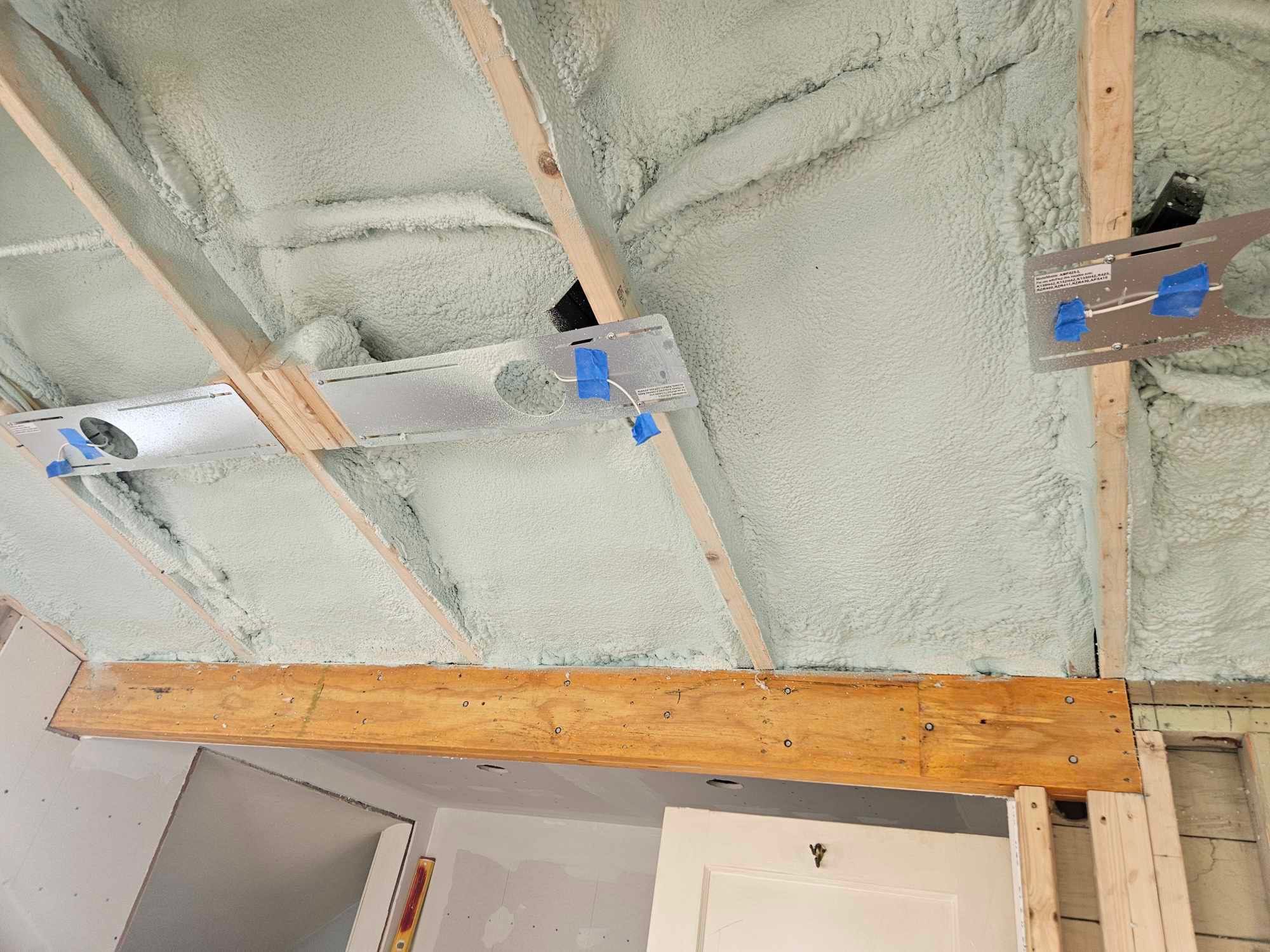
Spray foam is well-suited for areas where air sealing and insulation need to happen simultaneously in a confined or irregular space. Rim joists, mechanical chases, and complex rooflines are common applications. It creates a tight seal that limits both heat transfer and moisture movement.
Blown-In Cellulose Insulation
Blown-in cellulose is a reliable and cost-effective choice for attics and open wall cavities. It fills irregular spaces thoroughly, provides consistent coverage, and performs steadily across the temperature ranges Western New York produces. It is one of the more commonly recommended materials for attic upgrades in our region.
Fiberglass Insulation
Fiberglass batts and rolls remain a practical option in open framing during renovations. Proper fit and careful installation are important to achieving the rated R-value. When conditions are right, fiberglass is a durable, cost-effective choice for new framing or open-cavity work.
Signs You Need Better Insulation
- Upper floors that are significantly warmer in summer or colder in winter than the rest of the house
- Drafts at baseboards, around electrical outlets, or near window frames
- Recurring ice dams along the roofline or frost buildup in the attic
- Existing attic insulation that sits below the tops of the joists or appears thin and patchy
- Heating or cooling equipment that runs frequently without resolving comfort complaints
- Utility bills that seem high relative to your home’s size and age
If several of these apply, the issue is almost certainly the building envelope rather than the mechanical systems. An insulation upgrade addresses the source rather than compensating for it.
Why Homeowners Choose Ivy Lea Construction
Ivy Lea Construction has been working on homes across Buffalo and Western New York for over 30 years.
We approach insulation as a system. That means accounting for air sealing alongside the insulation material, selecting the right product for each zone of the home, and ensuring the work is done in a way that supports the performance of other building systems rather than working against them.
Why Insulation Makes Such a Difference in WNY
Buffalo averages more than 90 inches of snow annually and regularly sees temperatures well below freezing. That sustained cold creates relentless pressure on a home’s thermal envelope. When insulation is thin, absent, or improperly installed, heat moves through the building assembly in ways that are expensive and uncomfortable.
What homeowners often notice first are the symptoms. Upstairs rooms that are uncomfortably hot in summer. Floors that are cold, even with the heat running. Ice dams forming at the roofline in winter. Heating equipment that runs constantly without keeping up. These are connected patterns that trace back to the same root cause.
Insulation slows heat transfer through ceilings, walls, and floors. When combined with targeted air sealing, it also stops the movement of air through gaps and penetrations that no amount of insulation can fully compensate for on its own. The two work together, and understanding that relationship is what separates an effective installation from one that underperforms.
Rebates, Financing, and Value
Insulation upgrades often qualify for local or utility incentives. We can help you explore available rebates and pair them with financing options. Many homeowners see lower bills and noticeably better comfort in the first heating season.
Request Your Free Estimate
If your home is drafty, your attic insulation is thin, or you are planning a renovation that opens up walls or the basement, this is the right time to evaluate what you have and what would make a meaningful difference.
Contact Ivy Lea Construction to schedule your hassle-free estimate. We will assess your home’s current insulation, explain your options clearly, and recommend a solution that fits your situation and your budget.
FAQs About Insulation
What does insulation actually do?
Insulation slows the movement of heat through walls, ceilings, and floors. It reduces conduction through solid materials and works best when paired with air sealing that stops heat loss through gaps and penetrations. The two together are what produce the results homeowners actually feel.
How much insulation does a Buffalo home need?
For attics in our climate, most homes perform best at R-49 to R-60. Walls, rim joists, and basements have their own targets depending on the assembly. We measure what is currently in place and recommend the correct level for your home and climate zone.
Which insulation type is best?
It depends on where you are insulating and what the space requires. Spray foam excels at air sealing complex details and irregular areas. Blown-in cellulose is well-suited for attics and open cavities. Fiberglass is effective in open framing during renovations when installed carefully. The right choice is almost always a combination based on the specific application.
Who should install insulation?
Look for an insulation contractor who treats air sealing as part of the same scope, not a separate or optional step. Clear communication, proper material selection for each zone, and clean workmanship all matter as much as the product itself.